

By Brett Duguay | BD Electrical & Solar | September 30, 2026
SPAN is proposing something unusual: put computing equipment at homes, connect those installations into a distributed network, and use available electrical capacity to run AI workloads. Its platform is called XFRA.
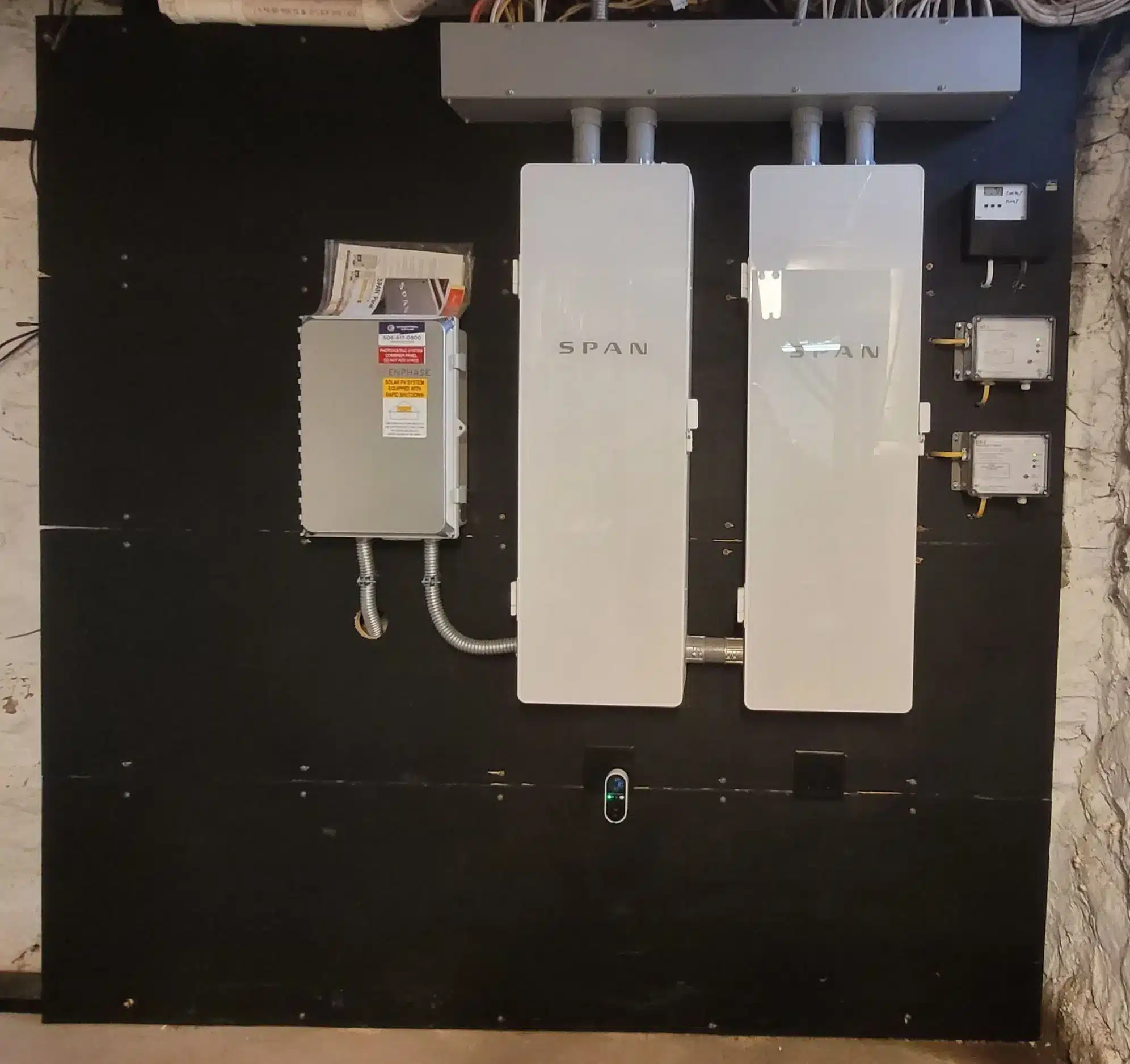
For homeowners, the interesting part is not just the computer. It is the relationship between the electrical service, a smart panel, a battery, and the equipment already running in the house. That is the part we pay attention to at BD Electrical & Solar.
What XFRA is designed to do
According to SPAN, an XFRA node combines computing hardware and cooling with a SPAN Panel and battery. Software coordinates work across multiple locations. The intended applications include AI inference—the work a trained AI model does when it responds to a request—and other distributed computing tasks. SPAN describes it as a complement to large data centers, rather than a replacement for the enormous clusters used to train major AI models.
The idea is to use electrical infrastructure that already exists. A home may have substantial capacity available at some hours, even though its service must accommodate much higher demand at others.
Available capacity is not free electricity
A 200-amp service rating is a limit on the electrical service; it does not mean the house continuously uses 200 amps. But unused capacity still needs to be verified. Adding a sustained computing load changes both energy consumption and the way equipment is loaded over time.
A smart panel does not make the wires larger. Its value is measurement and control. The design must establish which loads can run together and what happens when demand approaches a limit. The utility’s transformer and local circuit matter too. Spare room at one panel does not establish spare capacity throughout a neighborhood.
What happens when the house needs more power?
SPAN’s white paper describes using the battery to support brief peaks and, in more demanding conditions, temporarily reducing flexible loads such as EV charging. During defined grid events, the network can move computing work to other nodes. SPAN says the local node is then powered down as quickly as possible so remaining battery capacity can support the home.
Those operating priorities deserve a plain-language explanation before anyone agrees to host equipment. A homeowner should know whether charging may slow, how much backup reserve is maintained, and who can change those settings.
The questions BD would ask before installation
- Electrical capacity: What are the actual continuous loads, required circuit ratings, and approved control limits?
- Backup operation: Which household circuits remain powered, and what happens when the battery is depleted?
- Location: Is there suitable space for cooling, service access, drainage, and required clearances?
- Ownership and service: Who maintains the equipment, pays for electricity, and removes it if the agreement ends?
- Connectivity: What broadband service is required, and how are household and computing networks separated?
Can you order XFRA through BD today?
As of September 30, 2026, XFRA’s website describes an initial 100-home proof of concept with U.S. residential new-construction builders and plans for broader expansion in 2027. Those are SPAN’s rollout plans, not a confirmed Massachusetts installation program or a delivery commitment from BD.
BD is a SPAN Authorized Installer. A SPAN panel can be considered today on its own merits: visibility into circuit use, load management, and integration with a compatible backup system. Buying one should not depend on an assumption that XFRA participation or advertised host benefits will become available at your address.
If you are planning solar, batteries, EV charging, or a smart panel, start with a complete home energy assessment. The right design should serve your home now and leave sensible options for the future.
Sources reviewed September 30, 2026: XFRA platform and pilot information; XFRA white paper; SPAN: What is XFRA?. Product descriptions and rollout plans are manufacturer statements.