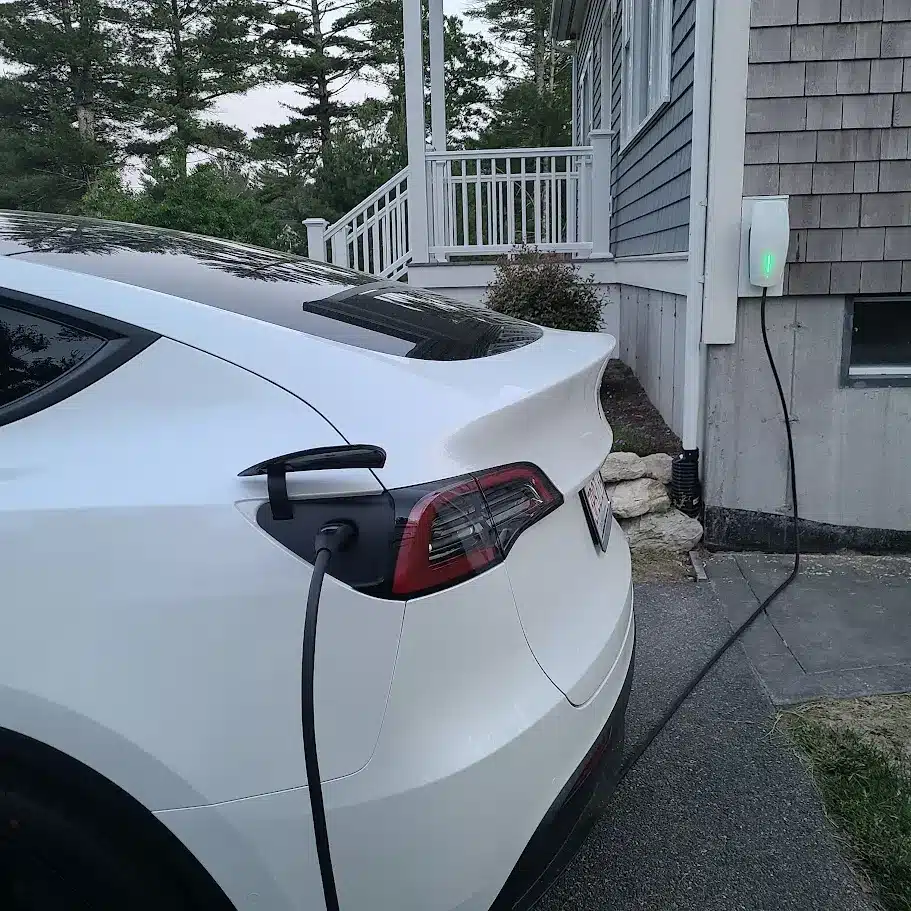
Convenient charging starts with the right electrical plan. We match charging equipment, service capacity, and installation details to your vehicle, driveway or garage, and daily driving.
Your mileage and time parked at home help determine a practical charging rate. More charger power is not always necessary for a full overnight recharge.
Your Garage or Driveway
Choose a convenient location with enough cable reach, suitable mounting, and a safe route from your electrical panel.
120 V charging may suit modest daily driving and long parking periods. It requires suitable listed equipment and an appropriate outlet and circuit verified for the load.
Level 2: Everyday Convenience
240 V charging is a common choice for charging at home while you sleep. A dedicated, correctly sized circuit and compatible equipment support your vehicle’s charging needs.
Controls That Fit Your Routine
Scheduling and supported load management can coordinate charging with your household demand, utility plan, or available solar production. We help you understand the controls included with your equipment.
Actual charging speed depends on the vehicle, charger, available electrical capacity, state of charge, and battery temperature. We size the installation around your driving and charging window.
Before choosing a charger
Plan the whole installation.
Electrical Capacity
Review the service, panel space, existing loads, and a load calculation. Compatible load management may be an option; a service upgrade is not automatically required or automatically avoidable.
Parking & Cable Route
Confirm the mounting location, cable reach, conduit path, trenching, exposure, and accessibility before installation.
Vehicle Compatibility
Confirm connector type, vehicle charging limits, and any manufacturer-approved adapter requirements. Plan for the vehicles you use today and expect next.
Smart Controls
Scheduling and supported load sharing can manage charging demand. Network reliability and the equipment’s behavior when connectivity is lost also matter.
A Second EV
If another electric vehicle is in your plans, consider compatible power sharing and the charging time each driver needs before adding equipment.
Future Expansion
Consider spare conduit, electrical capacity, and a route for another charger if your household needs change.
Connect charging to your energy plan
Solar-aware charging is different from powering your home.
With compatible controls, charging can be scheduled or adjusted to use available solar and manage household demand. A standard EV charger does not turn a vehicle into home backup.
Bidirectional charging requires a compatible vehicle, charger, transfer equipment, controls, and an approved installation. We evaluate this separately from ordinary home charging.
Not always. We evaluate existing loads and service capacity, then compare a suitable charging rate, compatible load management, and any required electrical upgrade.
Can I charge from my solar panels?
Solar can offset charging energy. Matching charging to solar production requires compatible controls and enough available power; charging at night may use grid or stored energy.
Can one system support multiple chargers?
Yes, when designed for it. Power sharing, available capacity, parking layout, and network compatibility determine the right approach.
Can an EV power my home during an outage?
Only a specifically compatible bidirectional system can do that. Ordinary Level 2 charging equipment alone does not provide home backup.
Let’s Plan Your EV Charging
Tell us about your vehicles, parking, and electrical service. We will help you choose a practical charging plan.
Are there government incentives for EV charger installation in Cape Cod?
Government incentives for EV charger installation in Cape Cod are available through various programs, including the Massachusetts Electric Vehicle Incentive Program, which offers financial assistance to both residential and commercial properties for the installation of EV charging stations.
What is the average time for EV charger installation in Cape Cod?
The average time for EV charger installation in Cape Cod typically ranges from one to three days, depending on site conditions and the complexity of the installation.
Can I install an EV charger myself in Cape Cod?
Installing an EV charger yourself in Cape Cod is possible, but it's essential to comply with local electrical codes and regulations. For safety and optimal performance, consider hiring a licensed electrician for the installation.
What are the benefits of EV charger installation in Cape Cod?
The benefits of EV charger installation in Cape Cod include promoting clean energy usage, enhancing property value, and providing convenient charging options for residents and visitors, all while supporting local initiatives for sustainable transportation.
What is the cost of EV charger installation in Cape Cod?
The cost of EV charger installation in Cape Cod typically ranges from $1,000 to $3,000, depending on the charger type and installation complexity. For precise quotes, it's best to consult with BD Electrical & Solar Services.
How to find EV charger installation services in Cape Cod?
Finding EV charger installation services in Cape Cod can be accomplished by researching local electrical contractors specializing in clean energy solutions, checking online directories, or contacting BD Electrical & Solar Services for expert assistance and quotes tailored to your needs.
What types of EV chargers are suitable for Cape Cod homes?
The types of EV chargers suitable for Cape Cod homes include Level 2 chargers, which offer faster charging times and are ideal for residential use. Additionally, solar-compatible chargers can enhance energy efficiency, aligning with clean energy goals.
Do I need a permit for EV charger installation in Cape Cod?
In Cape Cod, a permit is generally required for the installation of electric vehicle chargers. It's important to check with local authorities to ensure compliance with specific regulations and guidelines.
How do I choose the right EV charger for my Cape Cod home?
Choosing the right EV charger for your Cape Cod home involves assessing your vehicle's charging requirements, available electrical capacity, and installation location. Consider whether you need a Level 1 or Level 2 charger based on your daily driving habits and charging speed preferences.
What permits are required for EV charger installation?
Permits required for EV charger installation typically include an electrical permit and, in some cases, a building permit. Local regulations may vary, so it's essential to check with your municipality for specific requirements.
cape cod ev charger installation, ev charging carver, ev charging station contractors, cape cod ev charging stations, ev charging station cape cod, electric car charging stations massachusetts, ev charging cape cod, electric charging stations massachusetts, electric vehicle charging stations massachusetts, best electric company in massachusetts, commercial ev charger installation boston ma, commercial electric car chargers boston ma, residential ev charger installation boston ma, home electric car chargers boston ma, ev charging solutions, ev home charging stations plymouth ma, ev charging solutions for commercial properties, ev charging solutions commercial properties, solar ev charging stations for businesses massachusetts, ev charging station installer south shore massachusetts, ev charging stations for business, ev charging solutions for your business, ev charging station company, ev charger installation carver ma, ev charging company, ev charging business, ev solutions, EV charging stations, electric vehicle charging stations, EV charger installation, commercial EV charging, residential EV charging, electric vehicle charging infrastructure, EV charging station contractor, Level 2 EV chargers, workplace EV charging, EV charging installation services
Benefits of Installing EV Charging Stations
Installing electric vehicle (EV) charging stations offers numerous advantages for homeowners, businesses, and municipalities. For homeowners, it provides the convenience of charging at home, eliminating the need for frequent trips to public stations and ensuring a full charge each morning. Businesses can attract and retain customers and employees by offering a valuable amenity, while municipalities can promote sustainable transportation and reduce carbon emissions within their communities, all supported by BD Electrical Services.
Key benefits include increased property value, reduced operational costs for businesses with EV fleets, and a significant contribution to environmental sustainability. By offering charging infrastructure, properties become more attractive to the growing number of EV drivers, fostering a greener and more accessible transportation landscape, expertly managed by BD Electrical Services.